
Scoreboard API
Introduction
Section titled “Introduction”Scoreboards are a great way to display information to the client. Each player can view exactly one scoreboard, and one scoreboard can be viewed by multiple players.
Scoreboard objects can be retrieved in two ways:
- Via the
ScoreboardManager(which can be retrieved from either theBukkitorServerinterfaces usinggetScoreboardManager()respectively). - A player’s currently shown scoreboard with the
Player#getScoreboard()method.
Scoreboards can be categorized in two ways:
- The main scoreboard (retrieved with
ScoreboardManager#getMainScoreboard()), which is saved across restarts and is the default scoreboard shown to players. - New scoreboards (created with
ScoreboardManager#getNewScoreboard()), which are not saved and only exist for the duration of you either keeping a reference to the object or a player viewing the scoreboard.
Objectives
Section titled “Objectives”To display information, a scoreboard must register an objective. This can be done by using
Scoreboard#registerNewObjective.
This method has the following parameters:
- The name of the objective, which is used for identifying it. You can use the same name in
Scoreboard#getObjectiveto retrieve the same objective. - The criteria. Traditional “Vanilla-style” scoreboards use this to automatically set the score of a scoreboard entry
to match the criteria. When designing a custom scoreboard, you probably want to set this to
Criteria#DUMMY, which has no built-in handling. - The display name of the scoreboard. Can be set to
null, which defaults the display name to the of the objective. This is used when displaying the objective anywhere, like a command response or the sidebar. - OPTIONALLY: The render type, which is either
RenderType#INTEGERorRenderType#HEARTS. Used for when the objective is displayed in the player list or below a player’s name. Defaults toINTEGER.
Display slots
Section titled “Display slots”A scoreboard can have multiple objectives, however, only one objective can be set to a particular display slot at a time. When you try to set the display slot of an objective to one which is already occupied, it will simply override that display slot.
To set the display slot, you can call setDisplaySlot(DisplaySlot)
on the Objective object.
There are three different display slots.
Sidebar display slot
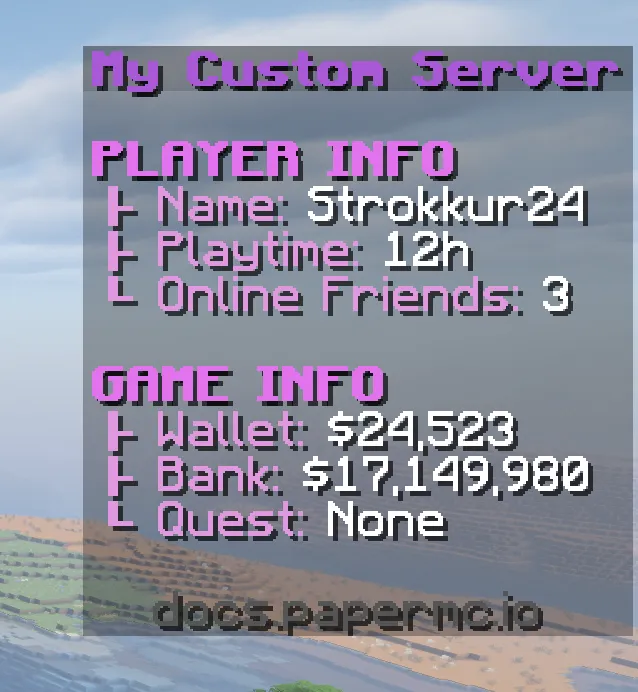
Section titled “Sidebar display slot”The probably most well-known display slot of an objective is the sidebar. That is also what most players generally understand as the “scoreboard”. It shows up on the right-side of a player’s client and consists of a title and up to 15 lines of scores. The display information is the same for all players viewing the same scoreboard instance.
Player list display slot
Section titled “Player list display slot”Objectives with this display slot show up in the player list (sometimes called TAB list) next to the name of the player. In order for a score to be visible, the score name needs to be the same as the player’s name. The score value is what gets displayed. All players have an implicit score value of 0.

Source code
Scoreboard board = ...;Objective obj = board.registerNewObjective(    "playerlist",    Criteria.DUMMY,    (Component) null,    RenderType.HEARTS);obj.setDisplaySlot(DisplaySlot.PLAYER_LIST);
Score score = obj.getScore(player);score.setScore(125);score.numberFormat(NumberFormat.styled(style -> style    .color(TestPlugin.C_PRIMARY)    .shadowColor(ShadowColor.shadowColor(0xAA8F618E))    .decorate(TextDecoration.ITALIC)));
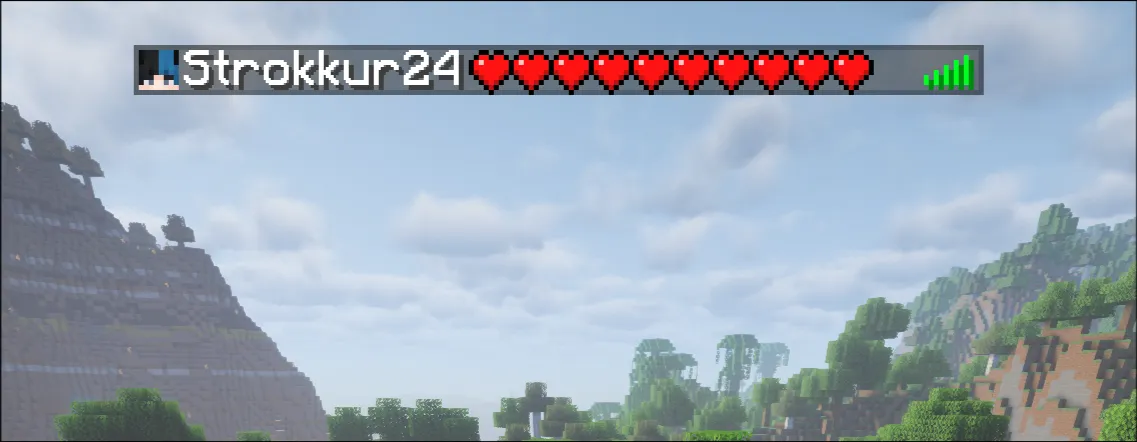
If you set the RenderType of the objective to HEARTS, it will instead display the provided score as a health bar.
This health bar score behaves differently depending on the score value:
Values 0 and below: The score is hidden; instead, only a big space is visible.

Values 1-20: A regular full health bar is visible.
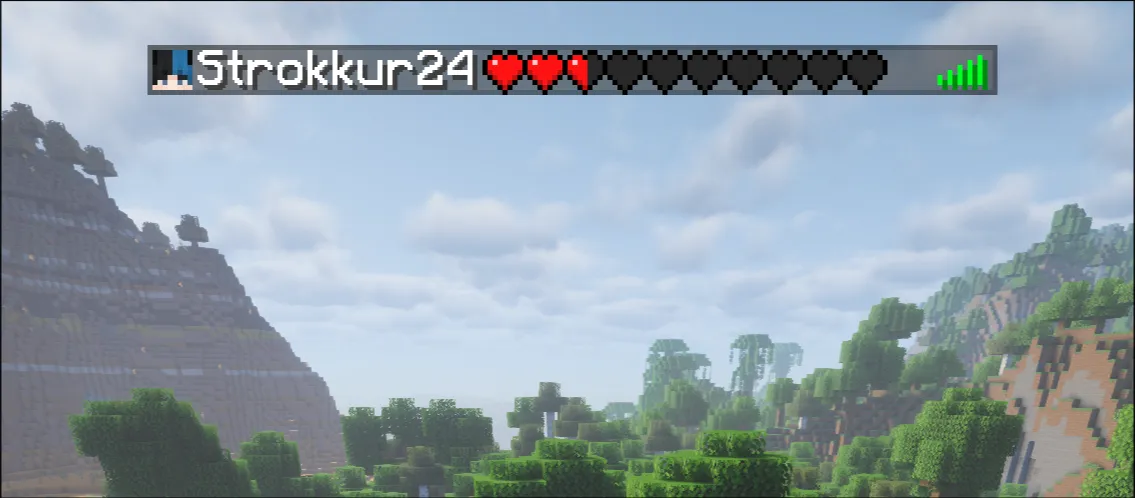
Values 21-43: The regular hearts get appended with “absorption” hearts.
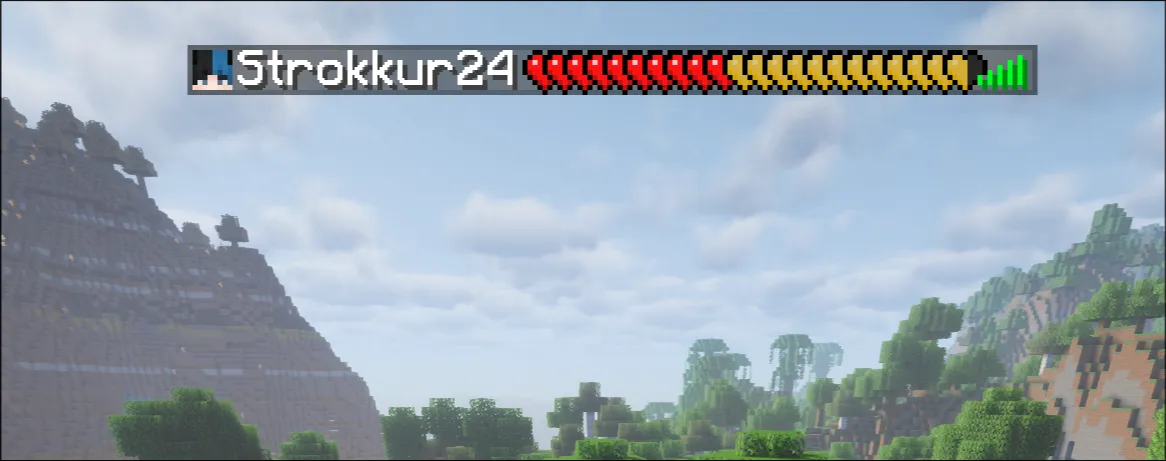
Value 44+: Instead of a health bar, text displaying the health points is visible.
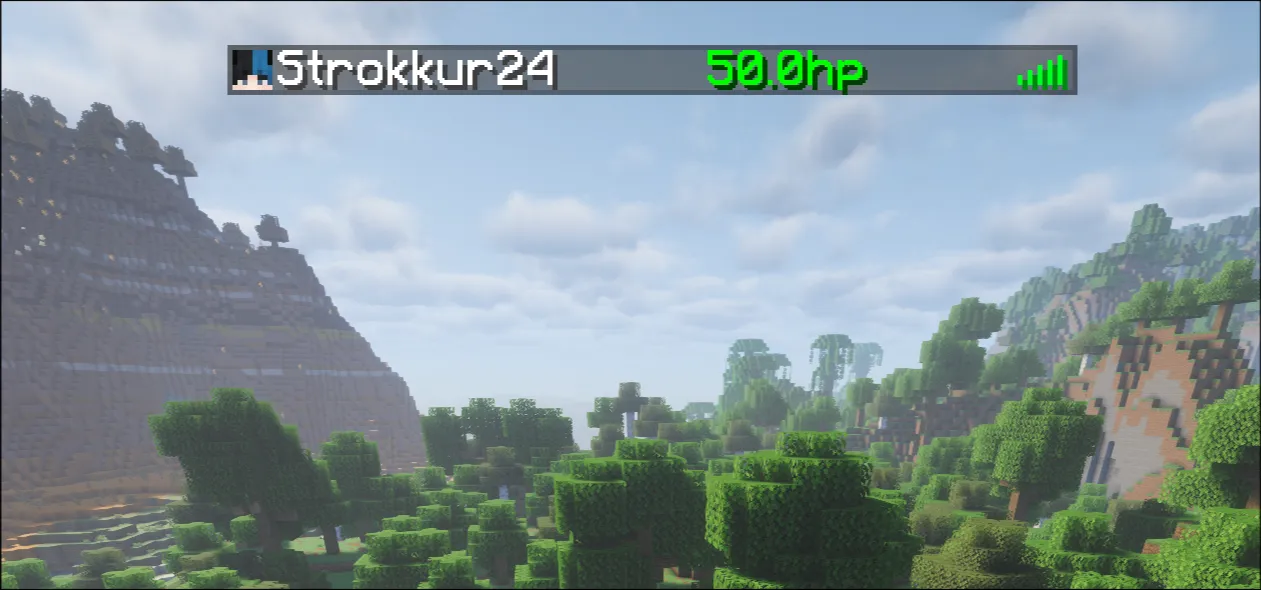
Below name display slot
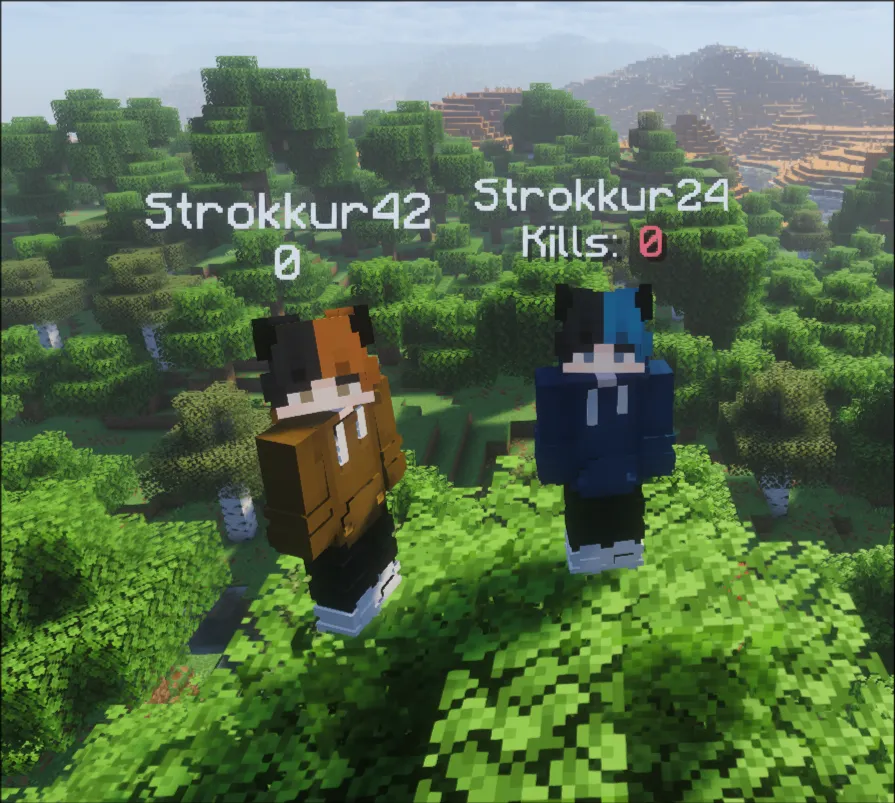
Section titled “Below name display slot”DisplaySlot#BELOW_NAME makes the score of a player render below the player’s
own display name.

Similar to the player list display slot, all players implicitly have a score of 0, if not set. Therefore, if you wish to have custom number formatting applied, you will have to manually set it for every single online player for every single scoreboard you have.
Source code
Player player = ...;Scoreboard board = ...;
Objective obj = board.registerNewObjective(    "below-name",    Criteria.DUMMY,    (Component) null);obj.setDisplaySlot(DisplaySlot.BELOW_NAME);
Score score = obj.getScore(player);score.setScore(0);score.numberFormat(NumberFormat.fixed(plugin.mm("Kills: <red>0")));
Number format
Section titled “Number format”You can define a default number format for an objective. All scores under that objective will inherit the default number format set, however a score’s own number format will override the objective one.
For example, to default to a blank number format, you can do this:
Objective objective = ...;objective.numberFormat(NumberFormat.blank());Scores
Section titled “Scores”You can retrieve a score from an Objective instance using the getScore methods.
Scores are saved using a String identifier. For players, their name is used. For entities,
their UUID is used instead. A Score instance consists of four parts: the score name, displayname,
the score value as an integer, and the optional number format.
For example:
Objective obj = ...;
// The name of the score can be whatever. For sidebars with custom// lines, you usually call the score the same as the line number.Score score = obj.getScore("2");
// Set the score value. A higher value makes it appear higher on the sidebar.score.setScore(2);
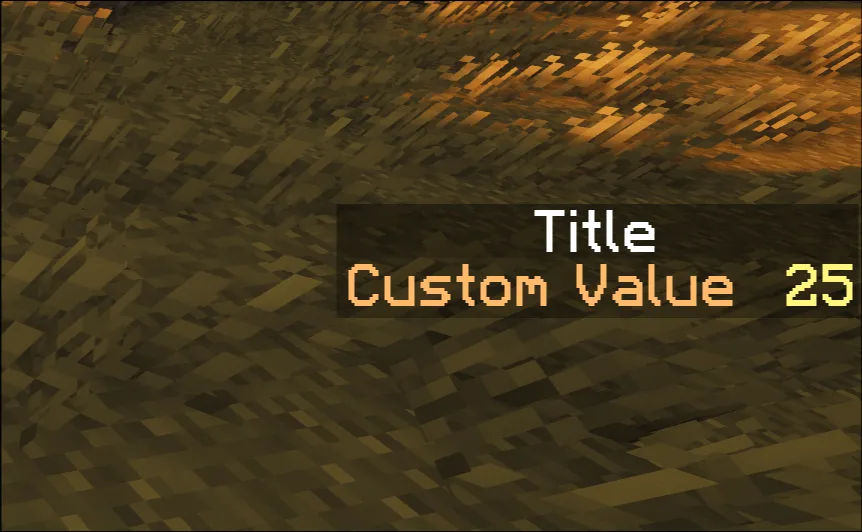
// The custom name is what actually gets displayed in the sidebar.score.customName(Component.text("Custom Value", TextColor.color(0xAABB24)));
// Set the number format of this score.score.numberFormat(NumberFormat.fixed(Component.text("25", TextColor.color(0x24FFAA))));